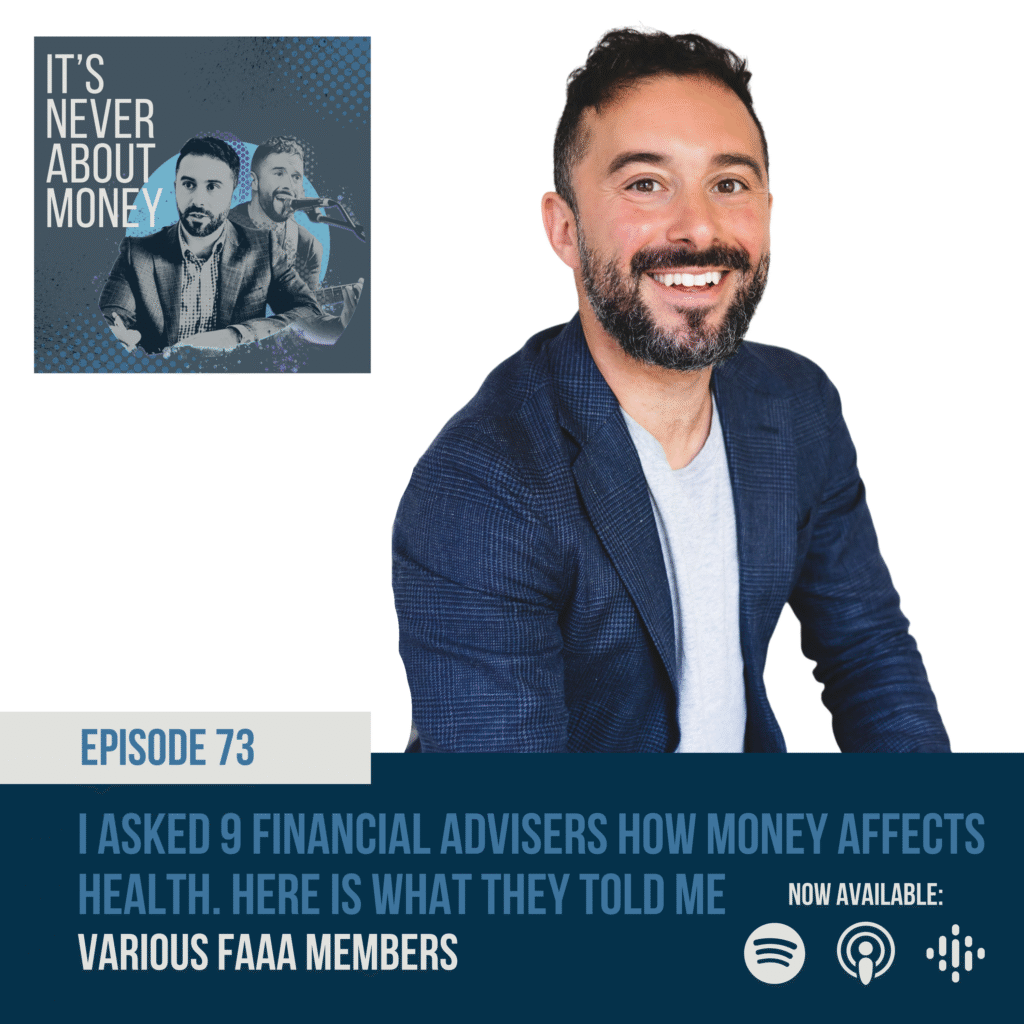
How Money Quietly Shapes Our Health: Insights From Nine Financial Advisers Across Australia
At the 2025 FAAA Congress, I walked the floor with one simple question:
How does money affect health?
What followed were some of the most honest and revealing conversations I’ve had this season. Across the busy convention floor, nine financial advisers shared stories from their work – stories of stress, clarity, overwork, grief, transition, and resilience. Their insights revealed one thing clearly: money and health are inseparable, and financial advice often becomes a health intervention long before clients realise it.
Clarity and Awareness May Help Reduce Stress
Several advisers observed that uncertainty around finances is a common contributor to stress. For many people, not knowing where their money is going can create ongoing anxiety.
Shannon Victor (Oxlade Financial) noted that some individuals avoid looking at their spending because they fear what they might find. Creating awareness of one’s financial situation may be an important first step in reducing unnecessary worry.
Similarly, Kelly King (Iconic Wealth) discussed how knowledge and understanding often matter more than income when it comes to lowering stress. Her experience suggests that guiding clients through the learning process can help them feel more comfortable with their financial decisions.
Bianca Musico (WARR HUNT) also shared that having a clear plan may give people a greater sense of certainty. For some clients, clarity may feel like “a weight lifted off their shoulders,” which in turn supports better mental wellbeing.
Overwork, Lifestyle Imbalance, and the Role of Perspective
A number of advisers reflected on the relationship between work and health. For some people, striving to improve finances may lead to long working hours or an unsustainable lifestyle.
Rob Pyne (HPH Solutions) highlighted that health, wealth, and happiness are interconnected, and overlooking one area may affect the others. Maintaining balance may be an important consideration for long-term wellbeing.
Mark O’Flynn (Oxlade Financial) observed that many clients are already on track to achieve their goals, which may mean they don’t need to work as hard as they think. Understanding this can help people make more informed choices about time, work, and rest.
For Sarah Leslie (Story Wealth), overworking can sometimes become a distraction from deeper personal challenges. She has seen how significant life events, such as health issues among family or friends, prompt individuals to reconsider their priorities.
Life Transitions and Rebuilding Wellbeing
Advisers working with clients through major life changes often see the close connection between money and health.
Jordan Vaka (PlanningSolo) explained that experiences like divorce can impact mental health long before the financial aspects are resolved. Small “wins” – such as allocating money to exercise, nutrition, or therapy – may help individuals regain control during difficult periods.
Nathan Fradley (Nathan Fradley Specialist Advice) frequently meets people who care deeply for others but struggle to prioritise themselves. In some cases, encouraging clients to allocate money specifically for their own wellbeing is a meaningful step in rebuilding confidence and balance.
Retirement specialist Martin McGrath (Financial Edge Group) noted that some people continue working out of fear of running out of money, even when their finances suggest they are ready to retire. Seeing their position clearly can help them make decisions that support both their health and lifestyle.
A Broader View: Money as a Support for a Good Life
Across these discussions, one idea stood out: financial advice can help people feel more in control of their lives, which positively influences wellbeing.
While money itself does not guarantee health or happiness, understanding one’s financial position provides confidence and allows people to make choices aligned with their values. Good advice is often about more than strategy – it’s about giving clients permission to invest in themselves, reclaim time, and focus on the things that matter most.
Personal Reflection
Walking the FAAA Congress floor, I was struck by how much insight comes from experience. These advisers have spent years sitting with clients, seeing real lives unfold, and witnessing the quiet ways financial stress erodes health.
It made me reflect on my own approach to money and wellbeing. So often, we focus on what we can earn or save, without recognising the impact that clarity, planning, and balance have on the quality of our lives. The conversations reminded me that financial advice is not just about numbers – it’s about human lives. And when done well, it’s a gift that extends far beyond the balance sheet.
Featuring
- Shannon Victor – Oxlade Financial
- Kelly King – Iconic Wealth
- Bianca Musico – WARR HUNT
- Mark O’Flynn – Oxlade Financial
- Sarah Leslie – Story Wealth
- Rob Pyne – HPH Solutions
- Jordan Vaka – PlanningSolo
- Nathan Fradley – Nathan Fradley Specialist Advice
- Martin McGrath – Financial Edge Group
Listen to the full conversation to hear how advisers across Australia are thinking about the relationship between money, behaviour, and wellbeing.