Sleep shapes every part of our lives, yet most of us only think about it when it starts to fall apart. We sacrifice it to early mornings, long workdays and glowing screens, rarely stopping to consider what that trade-off might mean over time.
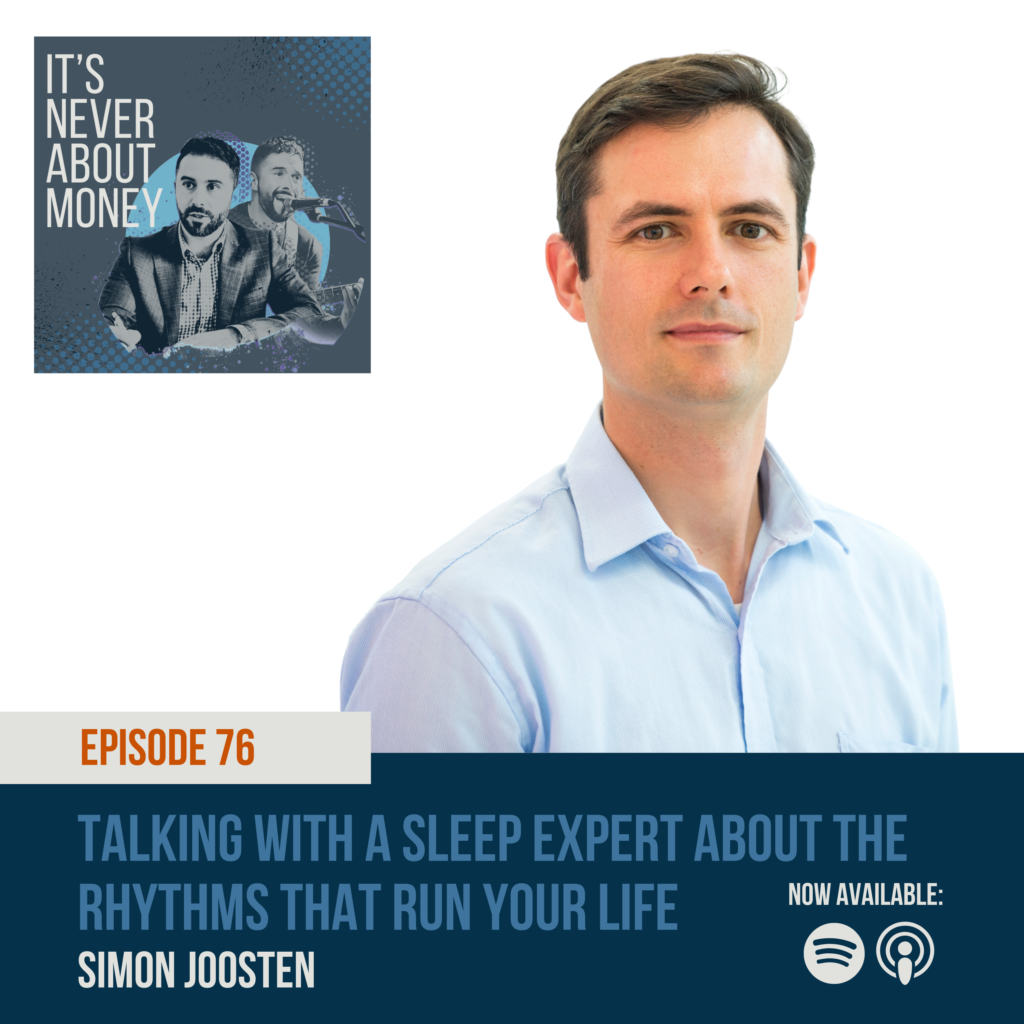
In this episode of It’s Never About Money, I’m joined by Simon Joosten, Associate Professor and one of Australia’s leading clinician scientists in respiratory and sleep medicine, to explore why sleep is not just a health issue, but a fundamental driver of how we think, feel and function.
From respiratory medicine to sleep science
Simon’s path into sleep medicine began through respiratory care and a PhD that revealed just how deeply sleep underpins almost every system in the body. From an evolutionary perspective alone, sleep wouldn’t exist unless it served a critical purpose. While we are more vulnerable when we sleep, the brain never fully switches off, remaining alert enough to protect us when needed.
What poor sleep really costs us
We talk about what happens when sleep is disrupted or chronically shortened, from obstructive sleep apnoea to everyday sleep issues. One of the most confronting insights is that people who are sleep deprived often believe they are functioning well, even when their performance is measurably impaired.
Chronic poor sleep is linked to:
- slower reaction times and reduced attention
- low mood, anxiety and depression
- impaired judgement and decision-making
- long-term health and longevity risks
Sleep, longevity and the long game
Sleep is often the first thing we sacrifice in the name of productivity or exercise, yet its consequences – much like poor financial choices – may not show up until years later. Simon challenges the myth that some people simply “don’t need much sleep”, explaining that most adults sit within a narrow biological range, with extremes linked to poorer cognitive outcomes and shorter lifespan.
The pillars of healthy sleep
At its core, healthy sleep rests on two key pillars:
Timing: going to bed at a consistent time matters more than most people realise
Duration: habitually sleeping around 7–9 hours
Rather than hacks or quick fixes, Simon emphasises simple behavioural strategies: predictable routines, clear boundaries between bed and waking life, and allowing the nervous system time to wind down.
Why sleep belongs in the bigger life conversation
Sleep is not indulgent or optional. It is as fundamental as eating, breathing and drinking water. When we neglect it, the ripple effects extend into our health, our relationships, our work and the decisions we make about our lives.
To hear the full conversation with Simon, listen to this episode of It’s Never About Money.
Because when we understand the rhythms that run our lives, we’re better placed to protect our wellbeing – now and into the future.